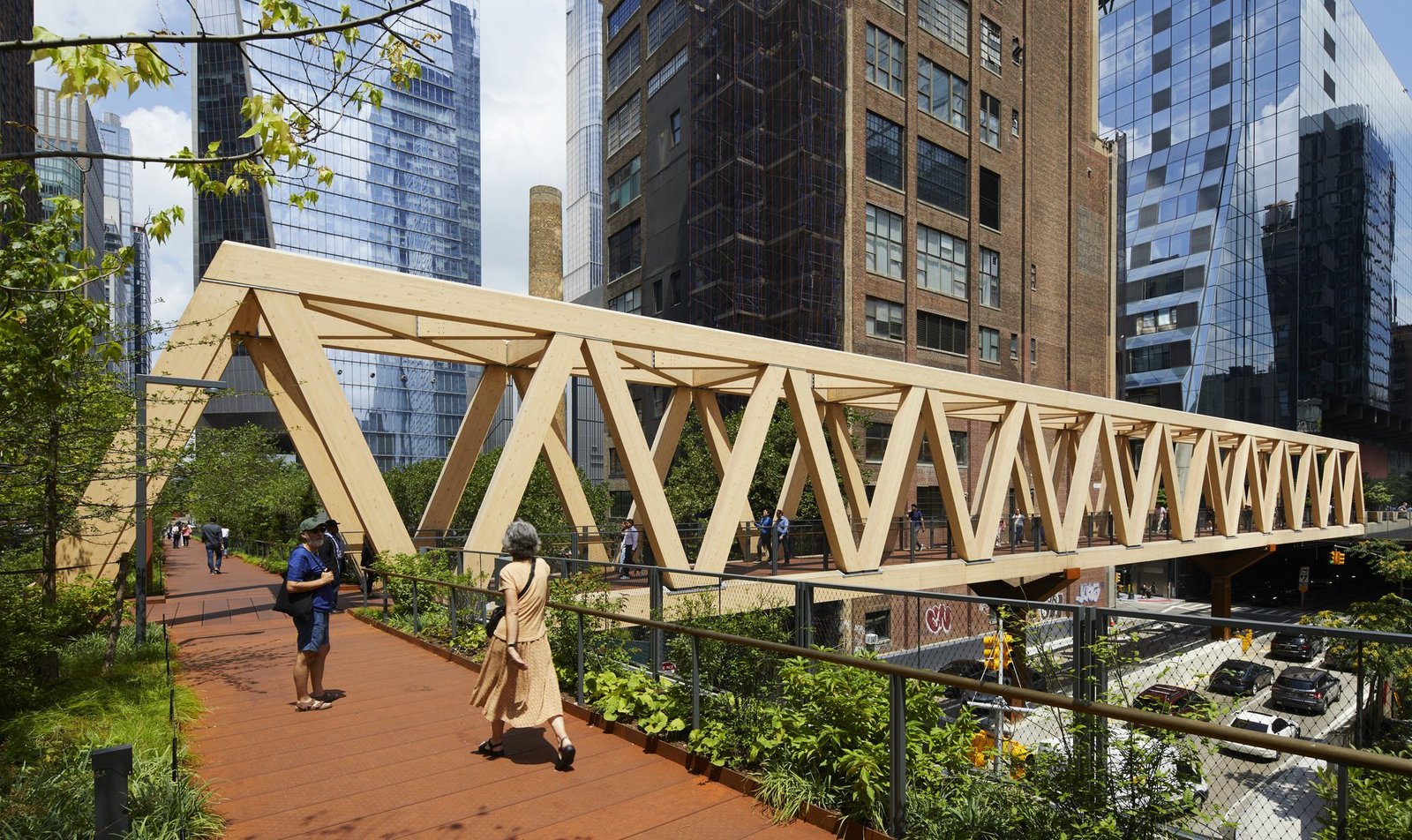
In the pulsating heart of New York City, where the ceaseless tempo of urban life intertwines with the whispers of history, the High Line – Moynihan Connector emerges as an audacious dialogue between the past and the present. This visionary project, shepherded by the collaborative minds of Skidmore, Owings & Merrill and James Corner Field Operations, weaves a seamless continuum of pedestrian pathways, anchoring the ephemeral spirit of connectivity within the urban fabric.
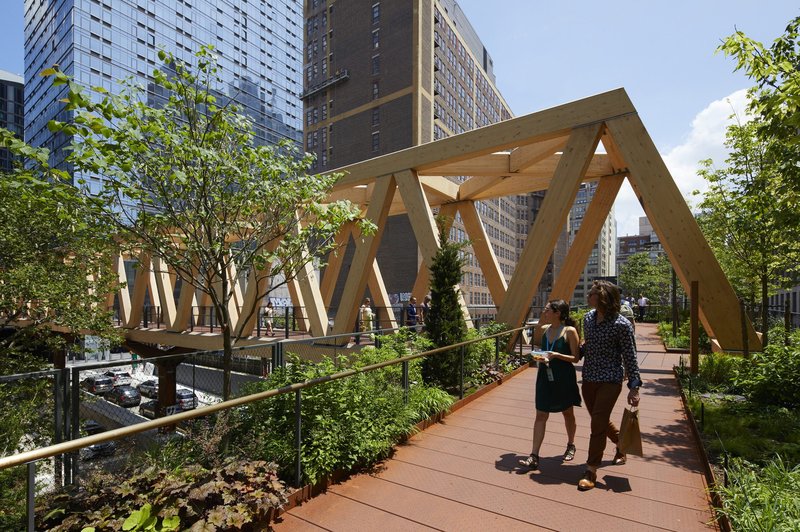
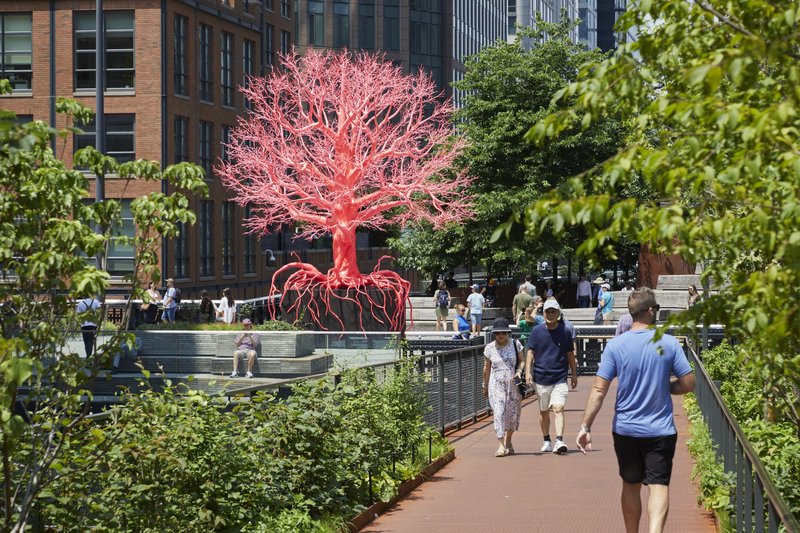
As one traverses these elevated corridors, the sensory experience is a symphony of contrasts. The 600-foot linear park, elevated above the bustling thoroughfares below, invites an episodic journey from the vibrant core of Midtown West to the verdant sanctuaries of the High Line. It is a pilgrimage through space, where each step unfolds a narrative etched in the language of light, shadow, and texture.
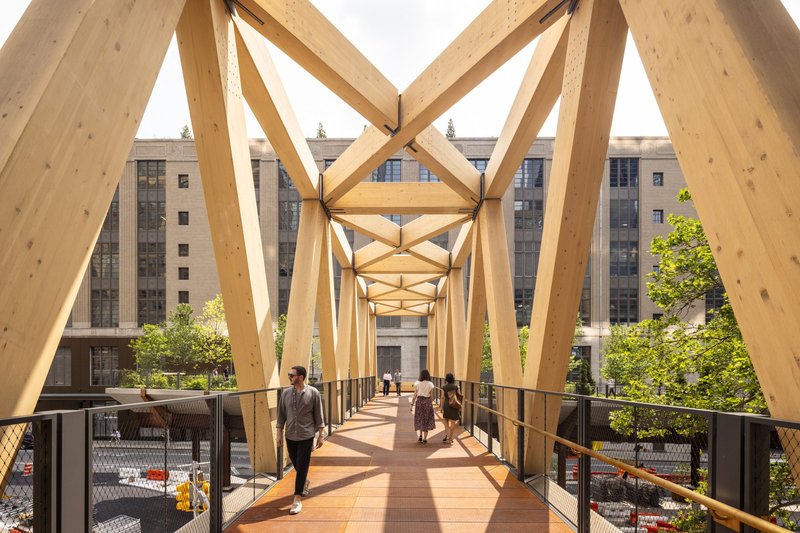
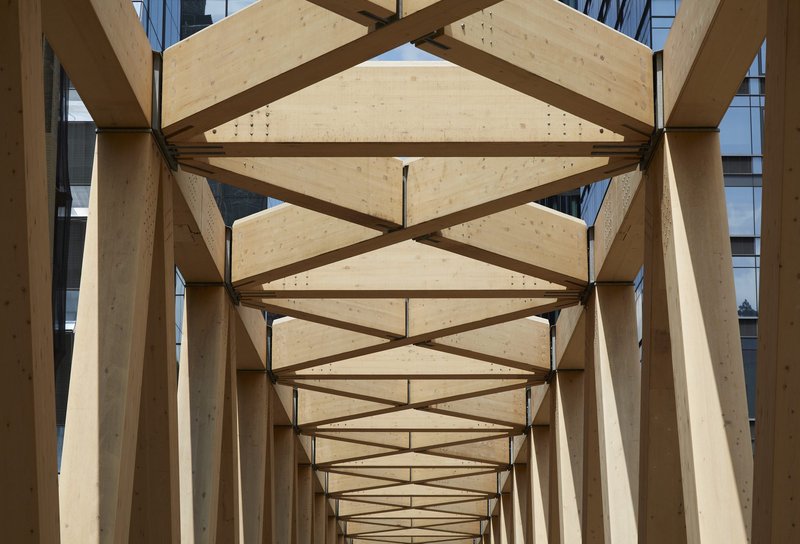
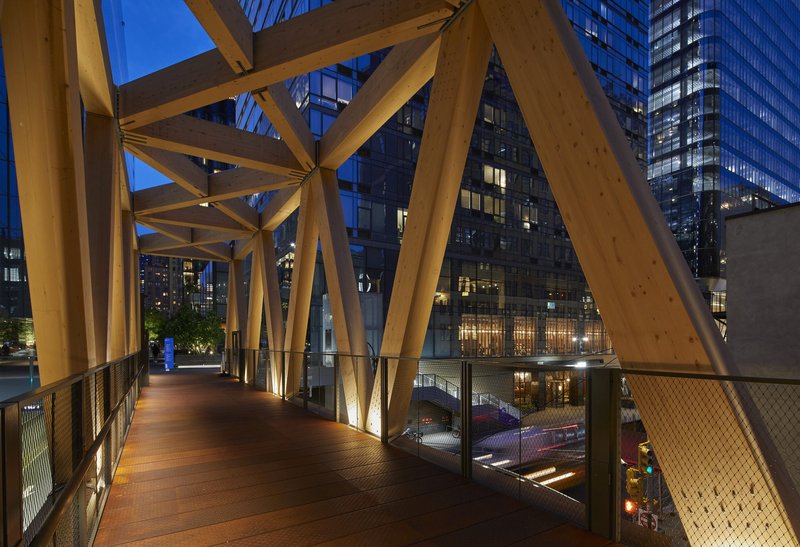
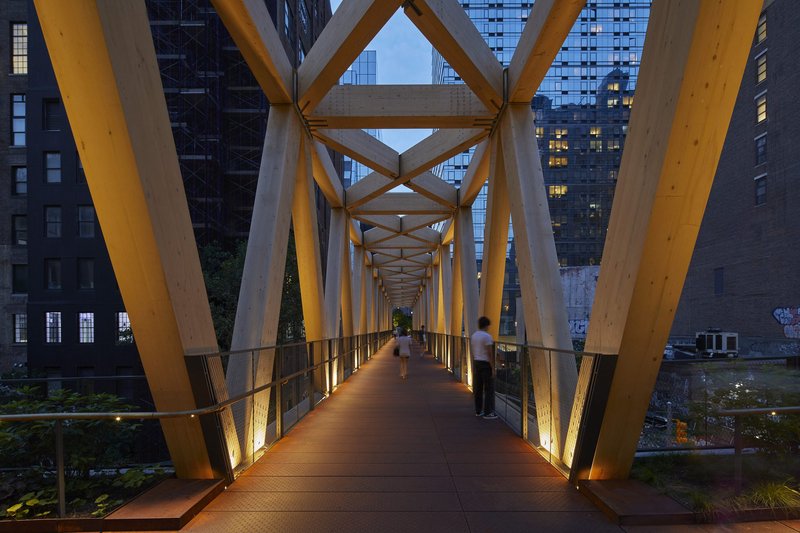
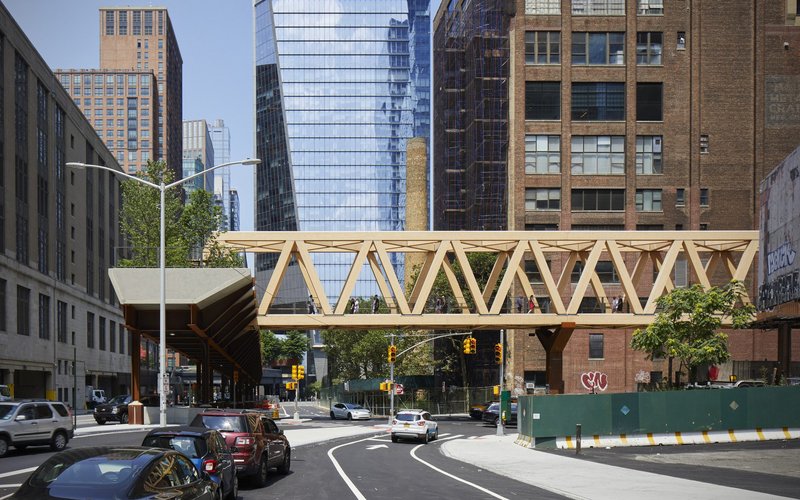
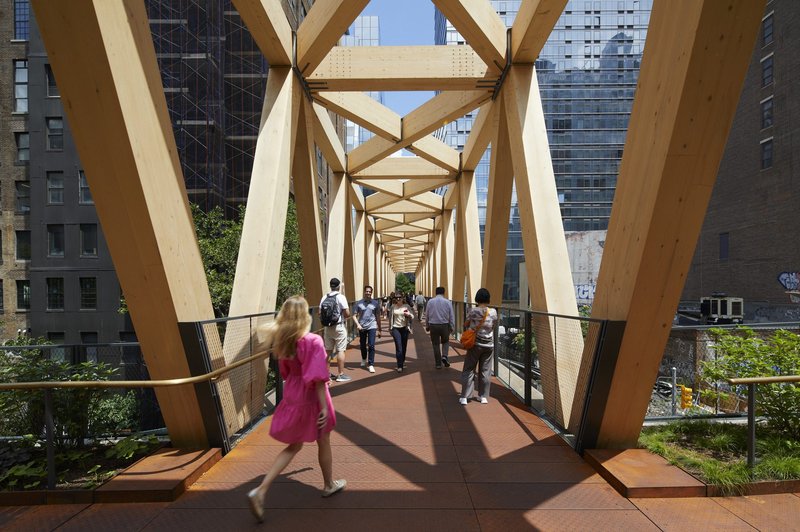
Upon emerging from Moynihan Train Hall, the visitor is greeted by the expansive embrace of Brookfield Properties’ Manhattan West. The 2.6-acre public plaza is a testament to the art of placemaking, where the choreography of space and form orchestrates a dialogue between nature and architecture. The journey continues across the Timber Bridge, a structural marvel that defies the gravitational pull of the city below. Crafted from sustainably sourced wood, this glulam Warren truss is more than a bridge; it is a vessel of serenity suspended amidst the urban cacophony.
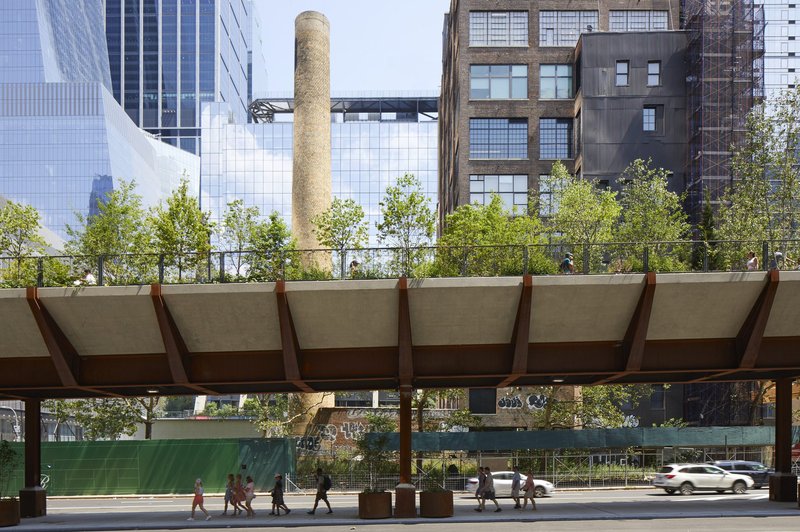
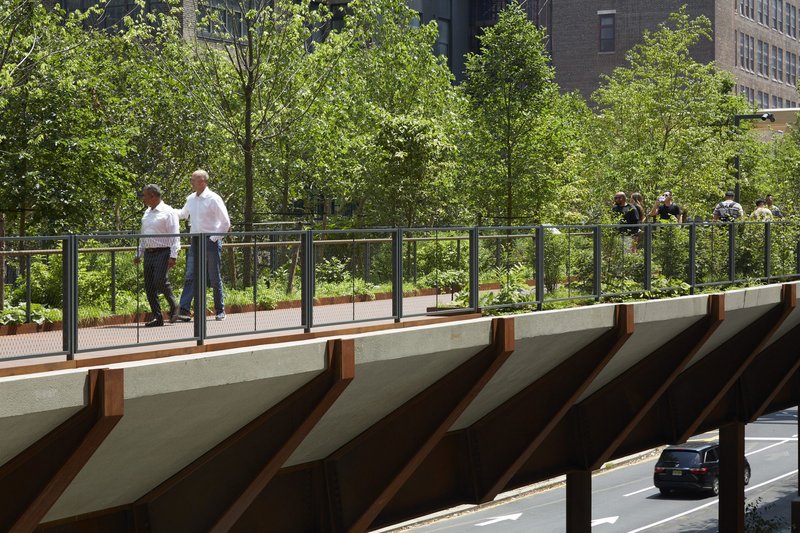
The Woodland Bridge, a diagonal path lined with trees, beckons with its promise of an immersive landscape. Here, the delicate interplay of soil and structure nurtures an Eastern Deciduous Forest, a living canvas that evolves with each passing season. The weathered columns and bracket arms that support this verdant expanse are a sculptural ode to the resilience of nature, a dynamic framework that adapts to the shifting topography of soil depths.
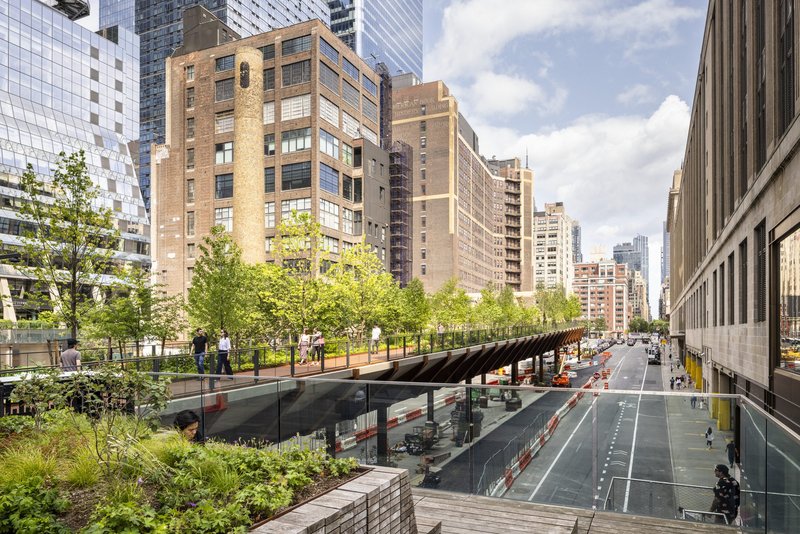
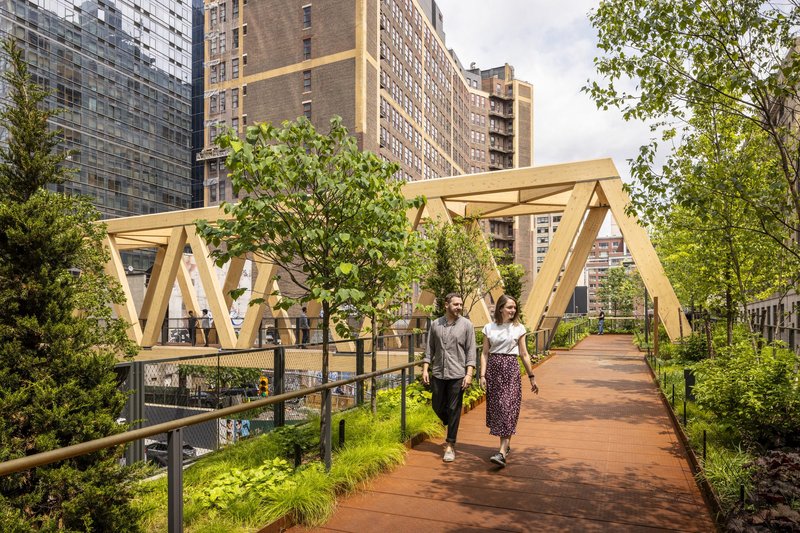
The architectural and structural expressions of the two bridges are distinct yet united by a harmonious material palette. The weathered steel decking and bronze handrails are tactile guides, leading pedestrians through a narrative of transformation. As one moves from east to west, the planting shifts in height, crafting a visual crescendo that echoes the timber structure’s ascent over the diagonal pathway. This dynamic landscape forges a visual link to the trees of Magnolia Court in Manhattan West Plaza, a reminder of the seamless connection between nature and design.
This project is not merely an infrastructural endeavor; it is an exploration of place and presence. It is a testament to the transformative power of design, where the creative synergy of SOM and Field Operations, under the aegis of Empire State Development and Brookfield Properties, reimagines the industrial past into a vibrant tapestry of human experience. As the fourth major SOM project in this evolving narrative, the Connector is a reflection of a broader vision that transcends the boundaries of architecture, inviting us to ponder the potential of urban spaces to shape our collective journey.
In this age of rapid urbanization, the High Line – Moynihan Connector stands as a beacon of possibility. It is a reminder that great design, like great connections, can be discovered in the most unexpected places, weaving together the threads of community, culture, and connectivity into a seamless tapestry of urban life.